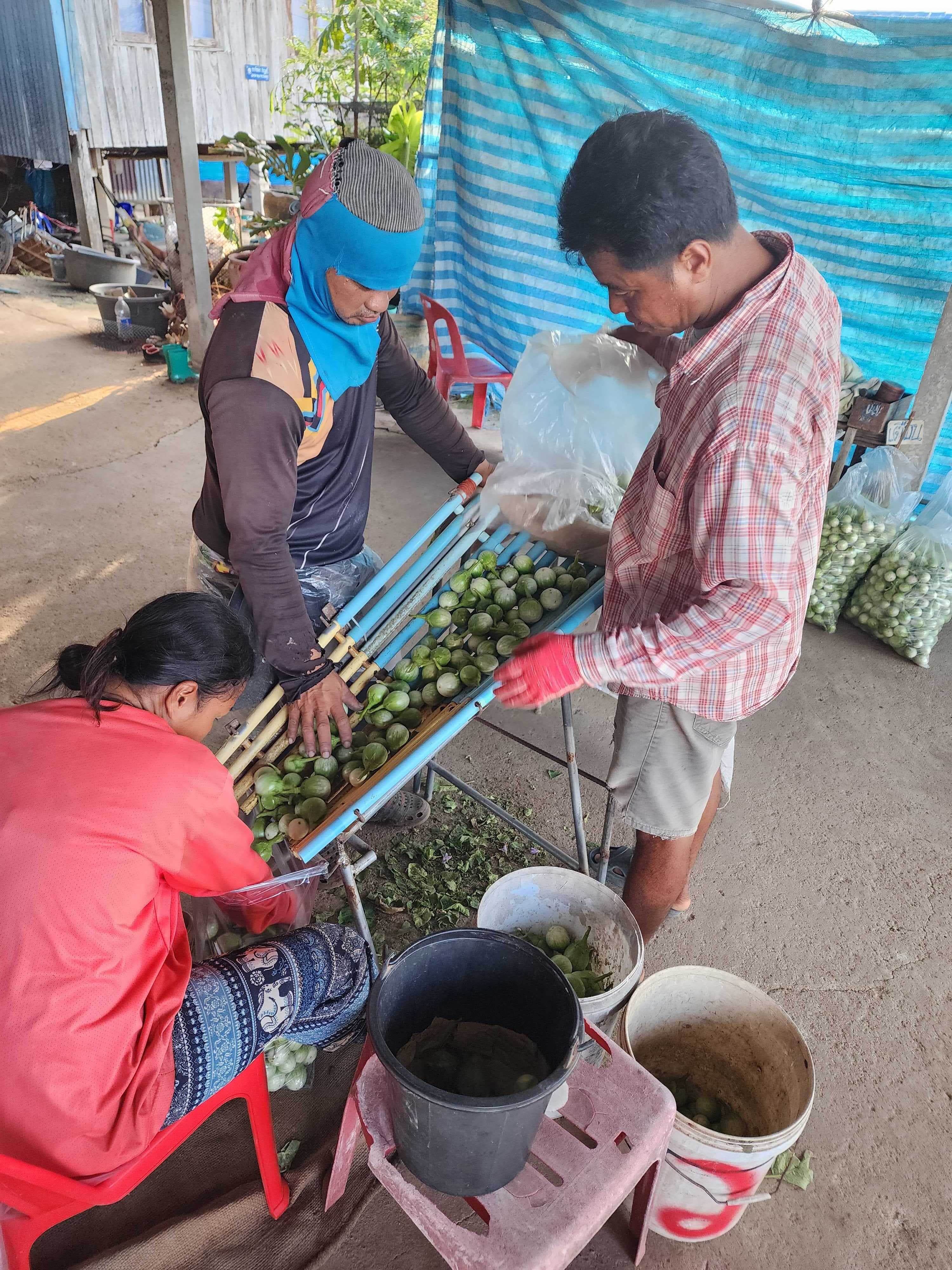
Export-Ready Crops
Grow Crops That Meet Export Standards.
Help your growers reduce reliance on synthetic pesticides and produce crops that can reach demanding export markets like the EU.
Export markets like the European Union reward quality, but they also enforce some of the world’s strictest limits on pesticide residues. For businesses sourcing from smallholder farmers, a single shipment that exceeds those limits can mean rejected produce, lost contracts, and strained relationships with buyers.
The Challenge
Why Export Standards Are Hard to Meet
Meeting residue limits isn’t just about one product or one farm. It depends on what happens across every field in your supply network.
Strict residue limits
The EU sets maximum residue levels (MRLs) for pesticides in food, and many are stricter than the limits in producing countries.
Reliance on synthetic pesticides
Growers facing pest and disease pressure often depend on synthetic pesticides, including in the weeks before harvest when residues matter most.
Rejected shipments
Produce that exceeds residue limits can be rejected at the border, costing farmers, exporters, and buyers alike.
Our Approach
How Living Roots Helps
Every export market has its own requirements, so we build each program around the standards you need to meet and the crops your growers produce.
Healthier crops, fewer synthetic inputs
Our products focus on strengthening crop health and natural immunity, helping reduce reliance on synthetic fertilizers and pesticides.
Programs built around your market
Our team recommends practical changes to inputs, application timing, and crop management, built around your crops and the standards you need to meet.
Visibility across your network
Hypha brings field records, soil and plant tests, weather, and satellite data together, giving you a clearer picture of what’s happening across your growers’ fields.
Prove it before you scale
Every program starts with a trial, measured against current practices, so you can see what works before rolling it out across your network.
We’re also developing naturally derived, low-residue pest and disease controls to give growers more alternatives to conventional crop protection.